Vaccination in Poultry: A Key to Disease Prevention and Economic Stability in India
Poultry farming plays a significant role in India’s agricultural sector, contributing substantially to the nation’s economy, food security, and rural livelihoods. As one of the largest producers of poultry products globally, India’s poultry industry continues to grow at a rapid pace. However, it faces several challenges, especially with regard to disease outbreaks, which can have devastating effects on poultry production and public health. Vaccination in poultry is one of the most effective preventive measures to combat diseases, ensuring both the health of the birds and the sustainability of the industry.
Preventing Poultry Diseases
Poultry diseases are a constant threat to the industry, and their rapid spread can cause severe economic losses. Common diseases such as Newcastle Disease (ND), Avian Influenza (AI), Infectious Bursal Disease (IBD), Marek’s Disease, and Fowl Pox are prevalent in India, with some even resulting in high mortality rates among poultry flocks. These diseases can spread rapidly within a farm and across neighbouring farms, creating major outbreaks. In a densely populated country like India, where poultry farming is highly integrated and commercialized, the risk of these diseases affecting large numbers of birds is significant.
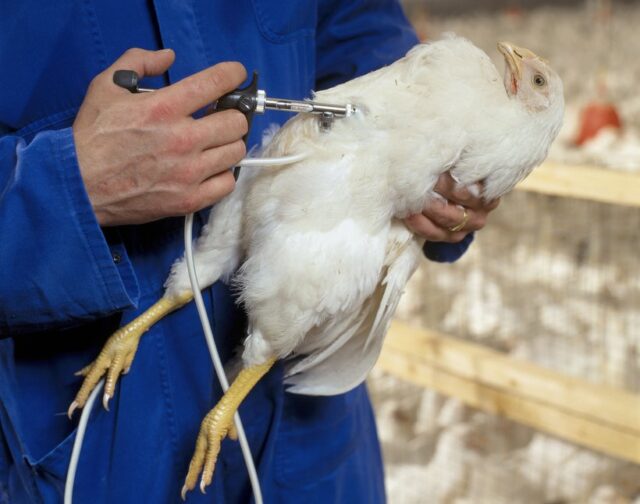
Vaccination serves as the primary preventive tool against these diseases, offering protection before an outbreak occurs. By vaccinating poultry flocks at appropriate times, farmers can minimize the incidence of infections, thereby reducing the likelihood of major disease outbreaks. For instance, vaccines for Newcastle Disease, one of the most common and deadly diseases in poultry, can effectively reduce morbidity and mortality rates, ensuring healthier flocks and preventing the spread of the disease to other farms.
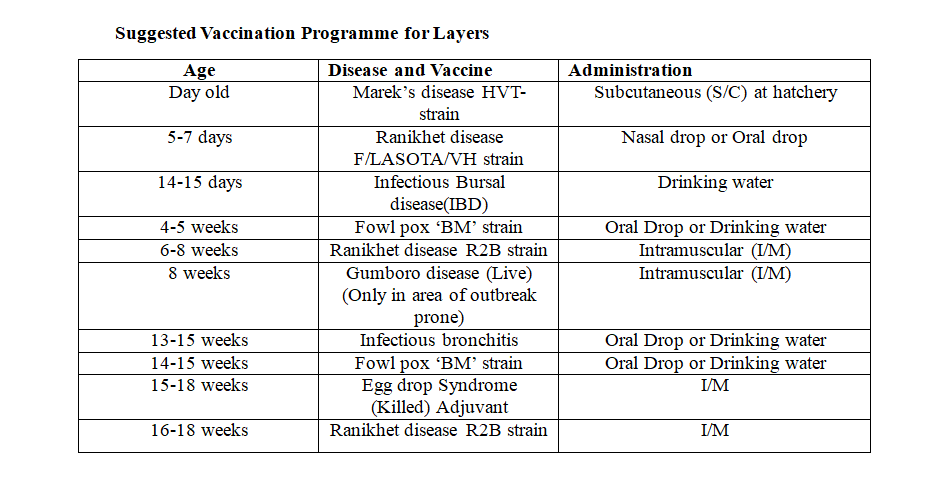
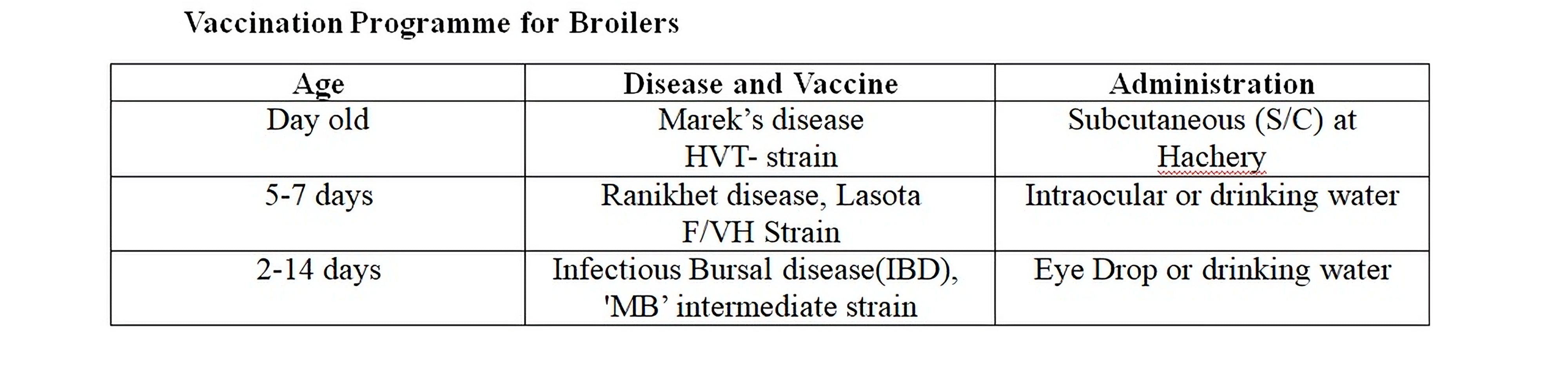
The vaccination schedule typically includes vaccines for both viral and bacterial diseases, with specific attention paid to diseases that are known to cause high economic losses or those that can lead to public health concerns. Vaccination protocols are developed based on the disease risks in different regions of India, taking into account the local poultry farming practices and the susceptibility of various poultry breeds.
Economic Benefits of Vaccination
The economic implications of poultry diseases in India are profound. The outbreak of diseases can lead to massive losses in terms of bird mortality, reduced productivity, and increased costs for veterinary care. The economic impact is not limited to the immediate loss of livestock but also includes indirect costs such as the loss of consumer confidence, disruption of supply chains, and the imposition of quarantine measures by government authorities. The situation is exacerbated in commercial poultry farms where large-scale production means that the economic stakes are much higher.
Vaccination plays a crucial role in mitigating these risks. By preventing diseases, vaccines reduce mortality rates, which in turn improves overall productivity. Healthy birds are more likely to reach market weight, produce more eggs, and grow at a faster rate, leading to higher returns for farmers. For example, vaccines for Marek’s Disease help prevent the development of tumours and paralysis, which can significantly reduce the productivity of the flock.
Furthermore, vaccination enables farmers to save on veterinary treatment and the purchase of replacement birds in case of disease outbreaks. By preventing diseases, vaccines reduce the need for costly medical interventions and help ensure the stability and profitability of poultry farming operations.
On a broader scale, vaccination also supports the overall growth of the poultry industry in India. As the industry continues to modernize and expand, the implementation of a robust vaccination program helps ensure the sustainability of production systems. It also helps India meet international poultry trade standards by preventing the spread of diseases that could result in the country being banned from exporting poultry products.
Public Health Protection
In addition to its economic advantages, vaccination in poultry is essential for protecting public health. Certain poultry diseases, such as Avian Influenza (AI), have zoonotic potential, meaning they can be transmitted from birds to humans. While the risk of human infection remains relatively low, the consequences of a potential outbreak could be catastrophic, both in terms of human health and the economic impact on the poultry industry.
India, like many other countries, has faced several outbreaks of Avian Influenza in the past, which have led to culling of affected poultry flocks, restrictions on poultry movement, and trade bans. In response, vaccination of poultry against AI has become an essential public health measure. By vaccinating poultry against AI, the risk of transmission to humans is minimized, thus preventing the possible spread of deadly strains of the virus.
Additionally, other diseases like Salmonella and Campylobacter, which can affect poultry, have foodborne transmission routes. The control of such diseases through vaccination can prevent contamination of eggs and meat, ensuring that poultry products are safe for human consumption.
Government and public health agencies emphasize the importance of vaccinating poultry to ensure the safety and quality of food, which directly contributes to the health of consumers. This is especially important in a densely populated country like India, where poultry products are a major source of protein in the diet of millions of people.
Conclusion
Vaccination is a cornerstone of poultry health management in India. As the poultry industry continues to expand and evolve, the importance of vaccination in ensuring the health and productivity of flocks cannot be overstated. By preventing diseases, vaccination reduces economic losses, enhances the productivity of poultry farms, and plays a critical role in protecting public health. To ensure a robust and sustainable poultry industry, the adoption of comprehensive vaccination programs across all sectors of poultry farming—commercial, backyard, and free-range—is essential.
The continued education of poultry farmers on the importance of vaccination, the development of new and improved vaccines, and the support of government policies that promote vaccination are crucial for the ongoing success of the poultry sector in India. With the right combination of preventive measures, including vaccination, India’s poultry industry will be better positioned to face future challenges while ensuring the safety and well-being of both poultry and people.

Deepti Arya1, Simran jeet Singh 2and Niddhi Arora3,
1Veterinary Officer, Government of Uttarakhand,
2PG Scholar, Department of Veterinary Medicine
3Professor, Department of Veterinary Medicine
2,3College of Veterinary and Animal Sciences, GB Pant University of Agriculture and Technology, Pantnagar, Udhamsingh Nagar, Uttarakhand- 263145