By:Siddhi Gupta
Introduction
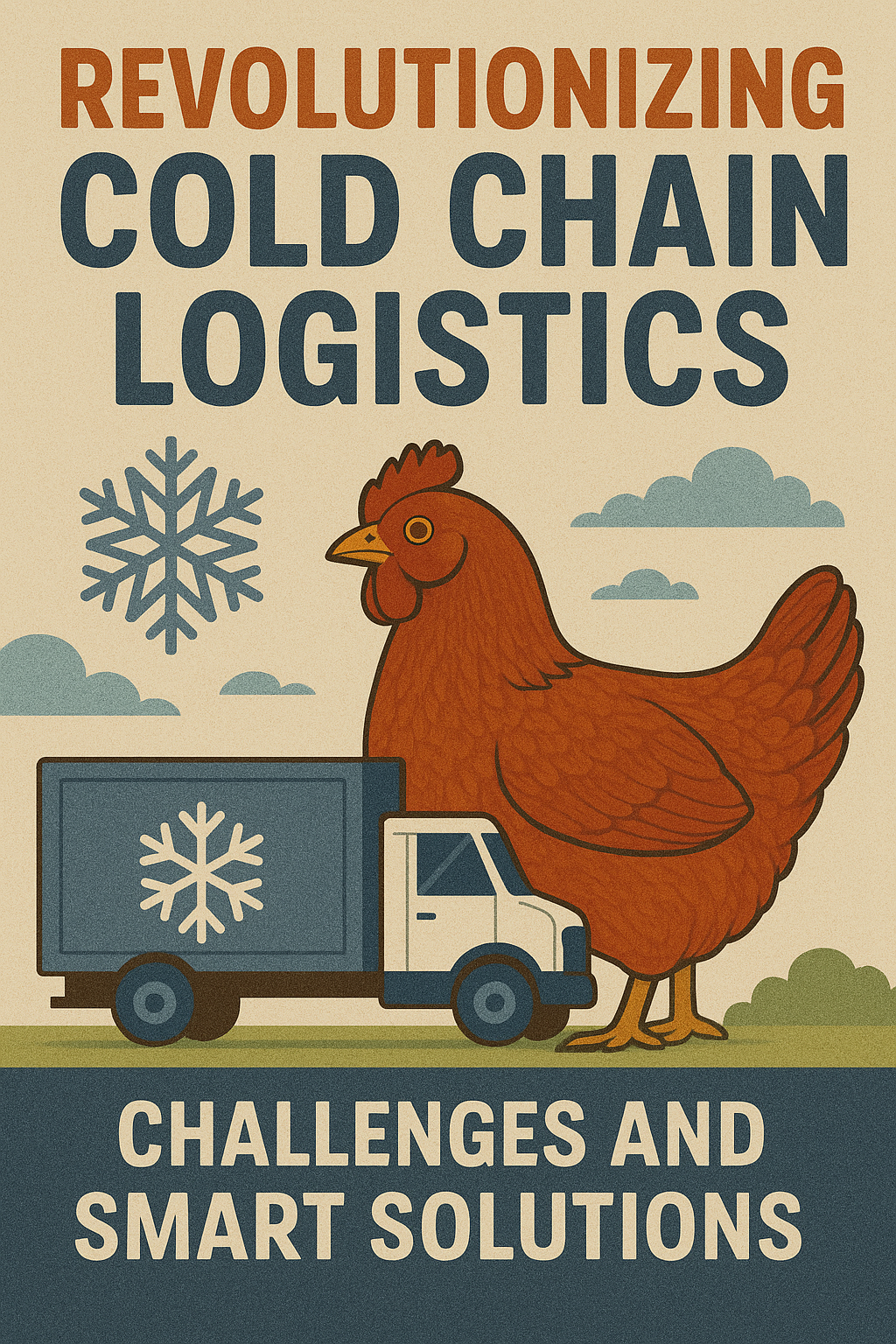
The poultry industry has emerged as one of the fastest-growing sectors in global agriculture, providing a critical source of protein for billions. With rising consumer demand for fresh, safe, and traceable poultry products, cold chain logistics has become the backbone of the industry. Efficient cold chain systems ensure the preservation of meat quality, reduce food waste, and improve food safety. However, revolutionizing cold chain logistics in poultry comes with its unique challenges. This article explores the hurdles faced by the poultry supply chain and the smart solutions that are redefining its future.
The Importance of Cold Chain in Poultry
Poultry meat and eggs are highly perishable, making temperature control crucial from farm to fork. A properly managed cold chain ensures that the products are stored, transported, and delivered within the recommended temperature range (0°C to 4°C for fresh poultry and -18°C or below for frozen products). Any break in this chain can result in microbial growth, spoilage, and economic losses.
As consumer expectations increase regarding food quality and safety, regulatory bodies across the world have also tightened compliance standards. Consequently, cold chain logistics is no longer optional—it is a necessity for competitive advantage in the poultry industry.
Key Challenges in Poultry Cold Chain Logistics
Despite advancements, the poultry cold chain still faces several systemic and operational challenges:
1. Fragmented Supply Chain
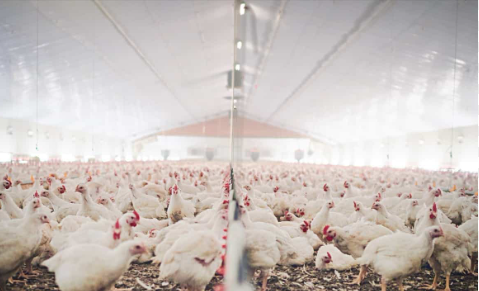
Many poultry producers operate in rural or semi-urban areas where infrastructure is lacking. Small-scale farmers may not have access to on-site chilling facilities or reliable electricity, leading to delays and temperature fluctuations early in the supply chain.
2. Limited Infrastructure
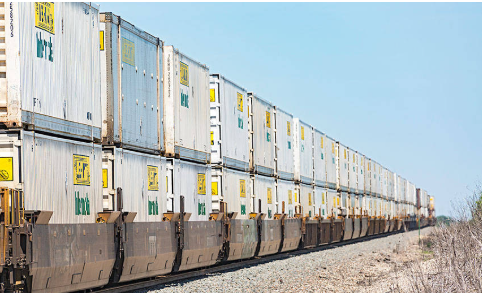
Insufficient numbers of cold storage units, refrigerated trucks, and integrated distribution centers are a major bottleneck, especially in developing countries. The lack of multimodal transportation equipped with refrigeration further complicates long-distance logistics.
3. High Energy and Operational Costs
Maintaining cold chain facilities requires significant energy input, particularly in regions with high ambient temperatures. Rising fuel and electricity costs add pressure to maintain profitability while ensuring compliance.
4. Temperature Excursions
Even brief deviations from required temperatures can compromise product quality. These excursions can occur due to equipment failure, human error, or poor handling practices, particularly during loading and unloading.
5. Lack of Skilled Workforce
Handling cold chain logistics demands trained personnel for tasks such as temperature monitoring, product handling, and maintenance of refrigeration equipment. Many operators still lack access to standardized training programs.
6. Inadequate Real-Time Monitoring
Traditional cold chains rely heavily on manual checks and periodic inspections. Without real-time monitoring, it is difficult to detect and respond to issues proactively, leading to reactive and costly damage control.
7. Traceability and Compliance Issues
With consumers and regulators demanding traceability, especially in the case of food-borne disease outbreaks, many poultry supply chains still struggle with incomplete data records and lack of end-to-end transparency.
Smart Solutions Revolutionizing Poultry Cold Chain
Technology and innovation are reshaping the cold chain landscape. Here are some of the most promising smart solutions:
1. IoT and Sensor-Based Monitoring
Internet of Things (IoT) devices have become game-changers in cold chain logistics. Sensors installed in cold rooms and transport vehicles continuously monitor temperature, humidity, and door openings. These devices send real-time alerts to operators if parameters deviate, enabling immediate corrective action.
Advanced systems also allow cloud-based data logging and analysis, helping companies identify patterns and optimize performance over time.
2. Blockchain for Traceability
Blockchain technology enables secure, immutable data recording at every stage of the poultry supply chain. From farm to processing to retail, every transaction and movement can be logged on a shared ledger. This creates end-to-end visibility, enhances trust among stakeholders, and simplifies compliance with food safety regulations.
3. AI and Predictive Analytics
Artificial Intelligence (AI) is helping companies predict potential breakdowns, assess demand, and plan inventory more efficiently. AI algorithms can analyze data from sensors, weather forecasts, and historical trends to optimize logistics routes and reduce energy consumption.
Predictive maintenance using AI helps identify early signs of equipment failure, reducing downtime and costly emergency repairs.
4. Solar-Powered Cold Storage
To address the energy challenge, solar-powered refrigeration units are gaining popularity, especially in remote or off-grid areas. These units offer a sustainable and cost-effective alternative to diesel generators and grid electricity, reducing carbon emissions and operating costs.
5. Refrigerated Transport Innovation
The development of modern refrigerated trucks and containers with independent power systems and better insulation materials ensures more reliable temperature control. Innovations like eutectic plates and phase change materials (PCMs) help maintain temperature even when power is interrupted.
6. Mobile Cold Storage Units
Portable cold storage solutions allow for flexibility in collection and distribution points. These mobile units can be deployed temporarily to meet seasonal surges in poultry demand or serve as backup during maintenance of permanent cold rooms.
7. Automated Cold Chain Warehouses
In large-scale operations, automation is streamlining operations. Robotics and automated guided vehicles (AGVs) reduce human error, ensure consistent product handling, and improve space utilization. Automated warehouses can operate with minimal lighting and lower temperatures, further reducing energy consumption.
8. Digital Training and Workforce Development
To address the skills gap, e-learning platforms and virtual simulations are being used to train cold chain personnel. Gamified modules help workers understand the importance of temperature control, best handling practices, and emergency protocols, reducing human-induced errors.
Case Study: Digitizing Cold Chain in India’s Poultry Sector
India, one of the world’s largest producers of poultry meat and eggs, faces significant cold chain challenges due to its hot climate and fragmented supply chain. However, forward-thinking startups and integrated poultry producers are adopting smart solutions.
For instance, a leading poultry brand implemented IoT-enabled reefer trucks equipped with real-time GPS and temperature sensors. The data from these devices is transmitted to a centralized dashboard monitored by logistics managers. As a result, the company reduced temperature excursions by over 80% and improved product shelf life by 30%.
In another case, a cold storage startup deployed solar-powered mobile refrigeration units across rural poultry farms, allowing small producers to preserve their products before transport. These innovations are empowering even the smallest players to integrate into a robust, technology-driven cold chain.
Future Trends: What Lies Ahead?
The poultry cold chain is poised for rapid transformation, driven by consumer demands, technological progress, and regulatory evolution. Key trends to watch include:
- Integration of Machine Learning with Cold Chain Data: Algorithms will make more autonomous decisions about routing, maintenance, and temperature control.
- Greater Focus on ESG (Environmental, Social, Governance) Goals: Companies will invest in sustainable refrigeration, waste reduction, and ethical sourcing to align with global climate goals.
- Cold Chain as a Service (CCaaS): Just like software, logistics companies are offering cold chain infrastructure on a service model, reducing upfront capital costs for poultry businesses.
- 5G and Edge Computing: Faster, more reliable connectivity will support real-time decision-making and control across distributed cold chain systems.
Conclusion
Revolutionizing cold chain logistics in the poultry sector is not just about preserving meat—it’s about building a resilient, safe, and efficient supply chain that benefits producers, processors, retailers, and consumers alike. While challenges remain, the convergence of smart technologies, innovative infrastructure, and skilled manpower is paving the way for a new era in poultry logistics.
As the industry embraces these transformations, businesses that invest in robust and intelligent cold chain systems will be better equipped to ensure quality, reduce losses, and meet the growing global demand for safe and nutritious poultry products.