INTRODUCTION
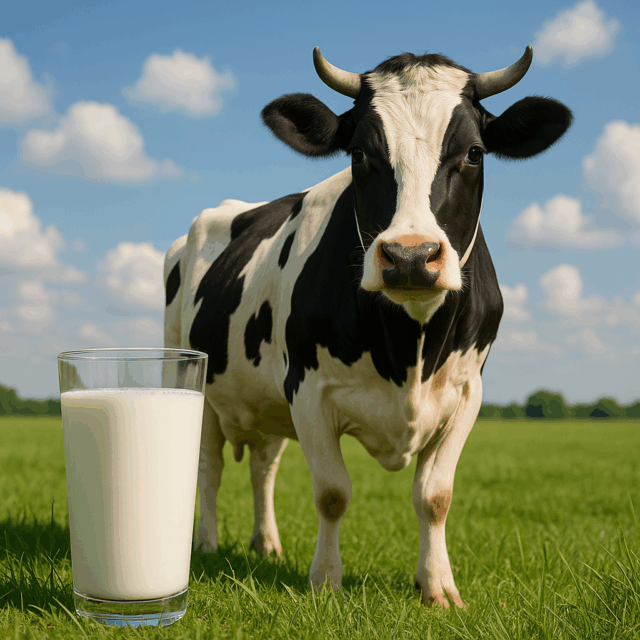
Milk is defined as the normal mammary secretion obtained from a healthy milch animal through complete milking, excluding colostrum, and without any additions. It is a fresh, clean lacteal secretion, not from animals within 15 days before or 5 days after calving. Milk is often considered as a well-rounded diet, encompassing a wide range of essential nutrients, although it is deficient in iron content. It provides the vital micronutrients crucial for both human and neonatal animal growth and overall health. India is the largest milk producer and maintaining its top position as the world’s foremost milk-producing nation, with a total milk output of 239.30 million tonnes. This marked a significant 3.78% increase compared to the preceding year. Indigenous cattle play a vital role in contributing 11.36% overall milk production, while non-descript cattle and non-descript buffaloes contributed 10.11% and 13.83%, respectively, to the total milk production of nation (BAHS, 2024).
Casein contains total four different subtypes, among that β-casein is one of most present subtype in cow milk. On the basis of genetic characterization, total 13 variants of β-casein exist, among these, A1 and A2 are the most common variant in milch cattle globally. A1 and A2 beta-casein in milk differ in the amino acid composition at the 67th position within their protein structure. In A1 milk, this position contains a histidine molecule, whereas in A2 milk, it contains proline. Beta-casomorphin-7 (BCM-7) is a bio active peptide which is released upon digestion of A1 milk in the small intestine. Due to its opioid-like properties, it is known to exert an inhibitory effect on the immune system (Elliott et al., 1999) . There is ongoing research and some suspicion that the consumption of A1 beta-casein and the subsequent release of BCM-7 may be associated with several health issues. These potential concerns include an increased risk of developing type 1 diabetes (DM-1), coronary heart disease (CHD), infant mortality, and autism.(Tailford et al., 2003, Yadav et al., 2020).
Difference between A1 and A2 β-Caseins
A1-type casein has the amino acid proline at the 67th position, while A2 has histidine at the same position. The binding of histidine to the preceding amino acid Isoleucine is easily broken by pancreatic elastase, resulting in the release in the gastrointestinal tract of the biologically active peptide BCM 7, which comprises seven amino acids. This doesnot occur with A2-type casein with proline at the histidine position, whose binding to Isoleucine is not hydrolyzed by pancreatic elastase. A2-type casein is generally more susceptible to enzymatic hydrolysis by gastric enzymes such as pancreatic elastase, pepsin, and leucine aminopeptidase. As a result of the different binding hydrolysis sites—in the case of A2 casein—a non-bonded BCM-9 is formed (Edwards et al., 2021).
Even before human domestication of cattle, A2 casein was the predominant casein variant. Following a natural mutation 5000–10,000 years ago, individuals emerged whose milk began to be dominated by A1-type casein. Over the following years, as a result of crossbreeding of individuals giving the most milk, which was beneficial from a production point of view, the breeds currently dominant in industrial milk production—Holstein, British Shorthorn, Ayrshire, Friesian, and Sahiwal—were separated. These are breeds with the A2A2 genotype, i.e., predominantly producing A2-type casein. The re duction in cattle biodiversity due to selective breeding has displaced A1-type milk. The percentage of A1 β-casein is higher in black and white breeds than in yellow and brown breeds, such as Pezzata Rossa and Bruna. A1 β-casein is absent in the milk of pure Asian and African cattle .(Bantivoglio et al., 2020).
Effects of A1 β Casein
1. Type-1-diabetes
Type-1-diabetes is a form of diabetes mellitus. It is due to a lack of insulin due to the destruction of insulinproducing β-cells in the islets of Langerhans of the pancreas by autoimmune processes. The contribution of cow’s milk containing A1-milk variant to the development of type-1-diabetes has been controversial for decades (Chia et al., 2018). Cow’s milk, one of the first foods introduced early to infants, is one such putative environmental factor (Chia et al., 2017).Children who have specific human leukocyte antigen genotype (HLA-DR) paired with a greater dietary intake of cow’s milk protein may be at an increased risk of developing islet autoimmunity and progression to Type-1- diabetes (Lamb et al., 2015).
2. Cardiovascular disease
Ecological studies have associated BCM-7 consumption with cardiovascular disease mortality. Research has revealed a link between the intake of A1 β-casein and an elevated risk of cardiovascular diseases in humans. A1 β-casein consumption has been linked to conditions like hypercholesterolemia and atherosclerosis, establishing its association with heart disease incidence (Venn et al., 2006). Animal studies have further supported this relationship, demonstrating that rabbits fed with β-casein A1 milk exhibit higher cholesterol levels and a greater extent of aorta covered by fatty streaks compared to those fed A2 β casein.
3. Gastrointestinal disease
The effect of A1 versus A2-milk on gastrointestinal was directly influenced (Haq et al., 2013). Similarly, it has been reported that casein and its derivatives, particularly BCM-7, exert a variety of effects on gastrointestinal function in animals, including reducing the frequency and amplitude of intestinal contractions (Becker et al., 1990, Mihatsch et al., 2005). Interestingly, it was also reported that in rats A1-milk feeding relative to A2- milk feeding significantly increased the colonic activity of the inflammatory marker myeloperoxidase by 65%, an effect also negated by the opioid blocker naloxone (Barnett et al., 2014).
4. Sudden death of infants
Casein-derived peptides as BCM-7 have been suggested to play a role in sudden infant death syndrome. There must be a possible relationship between BCM-7 and sudden infant death syndrome (Sun et al., 2003). On the other hand, the studies have shown that the sera of some infants after an apnoea event contained more BCM-7 than that of the healthy infants in the same age. These results indicate that some children may be sensitive to A1-milk (Wasilewska et al., 2011).
5. Milk Intolerances
A2 milk, oftenly found easier to digest, still contains lactose, a primary concern for milk intolerance. Paradoxically, BCM 7 released from A1β-casein appears to slow down food passage through the digestive system, providing more time for lactose fermentation. Additionally, some individuals may specifically exhibit intolerance to BCM-7, contributing to this phenomenon (Prasad et al., 2024).
6. Autis
Autism, also called autism spectrum disorder, is a group of neuro developmental conditions characterized by social deficit and repetitive behaviours (Cass et al., 2008). It is believed that peptides like BCM-7 might play a role in the development of autism. However, the studies on this relationship are not always displayed (Kost et al., 2009).
Conclusion
Whether A2-milk is really healthier than A1-milk or not; farmers, breeders and societies have been dealing with this for several years. The difference between the two milk variants is only a single amino acid deviation of beta casein. In the course of development, the A1-milk mutation has occurred at some point, because the A2-milk is considered the more natural form. A1-milk and the peptide BCM-7 may be linked to heart disease, diabetes, autism, sudden death of infants and inflammation in the digestive system.A1 milk remains a widely consumed commodity without any bans or restrictions, as it appears that its potential influence on these disorders may be intertwined with various other factors, including environmental influences and dietary habits. Presently, India stands as the world’s largest milk producer, a feat achieved through strategic measures such as the selection of high-yield breeds, improvements in fodder quality, and cattle crossbreeding programs. Notably, crossbreeding has led to the creation of high-yield cattle varieties that predominantly produce A1 milk, raising concerns within the Indian context. Nevertheless, a significant portion of India’s milk production is sourced from buffalo, which predominantly yields A2 milk. The results are mixed and further studies are needed.
Corresponding Author
Vidushi Sharma, Dibyendu Chakraborty*, Komal Deep Kour, Aakriti Sudan, Soshthi Talwar, Deesha Gupta, Palak Sharma Vikas Mahajan and Nishant Kumar
Division of Animal Genetics & Breeding
FVSc&AH, SKUAST-Jammu, R. S. Pura, Jammu-181102, J& K, India