Coccidiosis in Poultry: A Major Challenge in the Industry
Coccidiosis is one of the most common and economically significant diseases affecting poultry worldwide. It is caused by protozoan parasites of the Eimeria genus, which target the intestinal tract of birds, leading to severe health complications, stunted growth, reduced productivity, and even death in severe cases. This disease spreads rapidly in commercial poultry farms, where environmental conditions often favor its transmission. Given its impact on flock health and farm profitability, understanding coccidiosis, its causes, symptoms, diagnosis, and effective control measures is crucial for poultry farmers and veterinarians.
Causes and Transmission
Coccidiosis is caused by various species of Eimeria, each affecting different parts of the intestinal tract. The most common species in chickens include:
- Eimeria tenella – Affects the cecum, causing bloody diarrhea
- Eimeria acervulina – Targets the upper intestine, leading to mild infections
- Eimeria maxima – Infects the middle intestine, resulting in severe intestinal damage
- Eimeria necatrix – Highly pathogenic, causing hemorrhagic lesions in the small intestine
- Eimeria brunetti – Affects the lower intestine, leading to severe tissue damage
These parasites have a complex life cycle, with oocysts (egg-like structures) being shed in the feces of infected birds. Oocysts become infective after undergoing sporulation, which occurs in warm, humid environments. Poultry contract the disease by ingesting contaminated feed, water, litter, or through direct contact with infected droppings. Overcrowding, poor sanitation, and high moisture levels create ideal conditions for the rapid spread of coccidiosis in poultry farms.
Symptoms and Effects of Coccidiosis
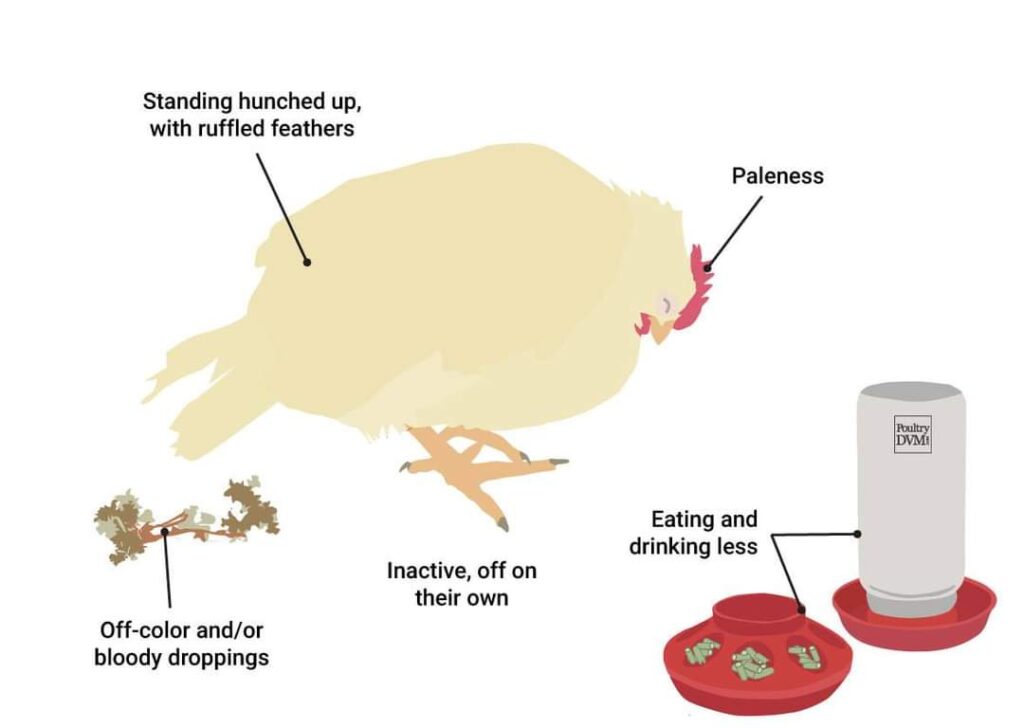
The severity of symptoms depends on the Eimeria species involved and the immune status of the bird. Common signs of coccidiosis include:
- Loss of appetite and weight loss – Affected birds eat less and fail to gain weight properly
- Diarrhea – Watery or bloody droppings, depending on the species involved
- Lethargy and weakness – Birds appear dull, isolate themselves, and show reduced movement
- Pale comb and wattles – Indicating anemia due to blood loss in severe cases
- Dehydration and ruffled feathers – Caused by intestinal damage and nutrient loss
- High mortality rates – In severe infections, death can occur within a few days
Coccidiosis damages the intestinal lining, reducing nutrient absorption, weakening the bird’s immune system, and making them more vulnerable to secondary infections. In broilers, it leads to poor feed conversion ratios, delayed growth, and higher production costs. In layers, it significantly reduces egg production and shell quality.
Diagnosis of Coccidiosis
Early and accurate diagnosis is essential to prevent widespread losses. Veterinarians use multiple diagnostic methods, including:
- Clinical observation – Identifying typical symptoms such as diarrhea and weight loss
- Post-mortem examination – Detecting intestinal lesions specific to Eimeria species
- Fecal examination – Microscopic detection of oocysts in droppings
- Molecular testing (PCR) – Advanced DNA-based tests to accurately identify Eimeria species
Rapid diagnosis allows for timely intervention and prevents outbreaks from spreading across the flock.
Prevention and Control Strategies
Coccidiosis control requires an integrated approach combining biosecurity, vaccination, medication, and natural supplements.
1. Biosecurity and Farm Management
- Regular cleaning and disinfection of poultry houses, feeders, and drinkers
- Ensuring dry, well-ventilated litter to prevent oocyst sporulation
- Avoiding overcrowding to reduce bird-to-bird transmission
- Practicing proper feed and water hygiene
2. Vaccination Programs
Live vaccines containing attenuated Eimeria strains help birds develop immunity without causing disease. Vaccination is especially beneficial in breeder flocks, long-lived layers, and organic poultry farming systems.
3. Anticoccidial Medications
Poultry farmers commonly use anticoccidial drugs to prevent and treat outbreaks:
- Ionophores (e.g., Monensin, Salinomycin, Lasalocid) – Disrupt Eimeria development in the gut
- Synthetic chemicals (e.g., Amprolium, Toltrazuril, Diclazuril) – Directly kill the parasites
- Rotation programs – Alternating between different drugs helps prevent resistance
However, excessive reliance on medication can lead to drug resistance, making alternative control strategies increasingly important.
4. Natural Alternatives and Herbal Remedies
To reduce dependency on drugs, many farmers are turning to herbal supplements and probiotics, including:
- Oregano oil – Contains carvacrol and thymol, which have anti-parasitic properties
- Garlic extract – Boosts immunity and reduces intestinal parasite load
- Turmeric (Curcumin) – Supports gut health and has anti-inflammatory effects
- Probiotics and prebiotics – Enhance gut flora, improving resistance against infections
Economic Impact of Coccidiosis
Coccidiosis is a leading cause of economic losses in the poultry industry due to:
- Increased mortality rates in broiler and layer flocks
- Reduced feed efficiency, leading to higher production costs
- Lower egg production and quality in layers
- Costly treatment and prevention measures
Poultry farmers must adopt a proactive approach to disease management to maintain profitability and flock health.
Conclusion
Coccidiosis remains a major threat to poultry farming worldwide, affecting bird health, farm productivity, and economic viability. Effective control requires a combination of strict biosecurity, vaccination, judicious use of medications, and natural alternatives. By implementing an integrated disease management approach, poultry farmers can minimize the impact of coccidiosis and ensure healthier, more productive flocks.

Sudhir Kumar1, andSimran jeet Singh2
1Assistant professor, Department of Veterinary Physiology and Biochemistry
2 PG Scholar, Department of Veterinary Medicine
1,2 College of Veterinary and Animal Sciences, GB Pant University of Agriculture and Technology, Pantnagar, Udhamsingh Nagar, Uttarakhand- 263145