Eggs have long held a prominent place in human diets across cultures and continents, cherished not only for their rich nutritional profile but also for their culinary versatility and cost-effectiveness. As a near-perfect source of high-quality protein, essential vitamins, and minerals, eggs contribute significantly to food security and human health. Over the centuries, the methods of egg production and processing have undergone a remarkable transformation—from traditional backyard poultry farming to highly sophisticated, large-scale operations. This evolution has been propelled by advances in agricultural technology, increasing global demand, shifting consumer preferences, and the need for stringent food safety standards. Today, the egg industry stands as a vital pillar of modern agriculture, supplying billions of eggs annually for both direct consumption and use in a wide array of food products and industrial applications. Understanding the journey of an egg—from the hen to the grocery shelf—offers valuable insights into the complex systems that sustain this essential food source.
1. The Egg Production Process
a. Breeding and Layer Management
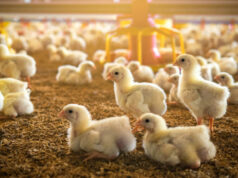
Egg production begins with the selection and breeding of laying hens. Commercial egg-laying breeds, such as the White Leghorn or Rhode Island Red, are preferred for their high egg-laying efficiency and feed conversion ratio. Pullets (young hens) are raised under carefully controlled conditions until they reach sexual maturity, typically around 18 to 20 weeks of age.
Once matured, hens are transferred to laying facilities where they begin producing eggs. These facilities vary in size and setup, ranging from cage-free and free-range systems to conventional caged environments. Each system has its own advantages and challenges, particularly concerning animal welfare, production costs, and consumer preferences.
b. Feeding and Environmental Control
Proper nutrition is crucial for maintaining high egg production and quality. Hens are typically fed a balanced diet rich in protein, calcium, and essential vitamins. Feed formulations are often adjusted based on the age of the hens and the production phase.
Environmental control systems regulate temperature, humidity, lighting, and ventilation in the poultry houses. Lighting schedules are particularly important, as light exposure influences laying cycles. A consistent 14 to 16-hour light period is commonly used to stimulate egg production.
2. Egg Collection and Initial Handling
a. Automated Collection Systems
In modern egg farms, eggs are collected automatically through conveyor belt systems that minimize handling and reduce the risk of contamination. These systems transport the eggs from the laying areas to central collection points for inspection and packaging.
Manual collection may still be used in smaller or specialty farms, particularly in free-range or organic systems. However, automation has become the standard in large-scale production due to its efficiency and hygienic benefits.
b. Sorting and Grading
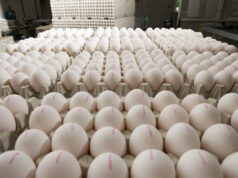
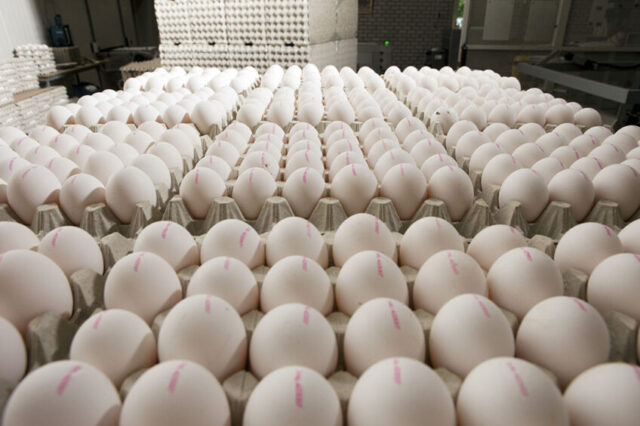
Once collected, eggs are visually inspected for cracks, dirt, and deformities. Advanced facilities may use electronic sensors and cameras for quality control. Eggs that fail to meet quality standards are separated for use in processing or discarded.
Eggs are then graded based on weight and size categories—commonly labelled as small, medium, large, and extra-large. They may also be classified by shell colour and internal quality factors such as yolk consistency and air cell size.
3. Egg Processing
While many eggs are sold as shell eggs, a significant portion is processed for use in food manufacturing, baking, and other commercial applications. Egg processing involves several stages to ensure safety, stability, and usability.
a. Washing and Sanitizing
Before packaging or further processing, eggs undergo a cleaning process. In shell egg production, eggs are washed with warm water and mild detergents to remove dirt and debris from the shell surface. This step is critical to reducing bacterial contamination, particularly from pathogens such as Salmonella.
Sanitization may include the application of food-grade disinfectants, and in some cases, eggs are coated with mineral oil to preserve freshness by reducing moisture loss and air exchange through the shell.
b. Breaking and Separation
For liquid egg products, eggs are mechanically broken, and their contents are separated into whites, yolks, or whole eggs, depending on the intended use. Specialized equipment ensures efficient breaking and minimizes waste.
Once separated, the egg components may be filtered to remove shell fragments or membranes. This step is essential for creating a uniform product, particularly in liquid egg processing.
c. Pasteurization
Pasteurization is a critical safety step in egg processing. It involves heating the egg product to a specific temperature for a set time to destroy harmful microorganisms without significantly altering taste or nutritional value. Liquid eggs, powdered eggs, and frozen egg products all undergo this process.
Pasteurized egg products are widely used in the food service industry and are favored for their extended shelf life and reduced food safety risks.
d. Drying and Packaging
Powdered eggs are produced by spray-drying liquid eggs into a fine, stable powder. This form is commonly used in large-scale food manufacturing due to its long shelf life and ease of storage.
All egg products are packaged according to strict guidelines to maintain hygiene, prevent contamination, and preserve freshness. Packaging labels typically include expiration dates, nutritional information, and storage instructions.
4. Quality Control and Food Safety
The egg industry is governed by rigorous food safety standards and regulations to ensure that consumers receive safe and high-quality products.
a. Regulatory Oversight
In many countries, egg production and processing are regulated by government agencies such as the U.S. Department of Agriculture (USDA), Food and Drug Administration (FDA), and equivalents in other nations. These organizations enforce standards on biosecurity, sanitation, labeling, and handling.
b. Biosecurity Measures
Preventing the spread of diseases among flocks is vital to maintaining egg production and safety. Biosecurity protocols include restricted access to poultry houses, vaccination programs, disinfection procedures, and regular health monitoring of birds.
c. Traceability and Recall Systems
Modern egg facilities implement tracking systems that allow eggs to be traced back to their origin. In the event of a contamination incident or recall, these systems enable swift identification and removal of affected products from the market.
5. Sustainability and Future Trends
As global demand for protein increases, the egg industry faces the challenge of balancing productivity with environmental responsibility.
a. Sustainable Practices
Efforts to improve sustainability include reducing feed waste, recycling manure for fertilizer, and adopting energy-efficient equipment. Cage-free and pasture-raised systems, while often more resource-intensive, are increasingly favoured for their perceived animal welfare benefits.
b. Technological Innovations
Advances in automation, artificial intelligence, and genetic selection are driving improvements in egg production efficiency and flock health. Precision farming technologies are enabling real-time monitoring of bird behaviour, feed intake, and egg output.
c. Consumer Trends
Consumer preferences are shifting toward transparency, ethical sourcing, and organic products. As a result, egg producers are adapting their practices to meet these expectations while maintaining affordability and safety.
Conclusion
Egg production and processing encompass a series of highly coordinated, detail-oriented operations that demand rigorous attention to animal welfare, biosecurity, food safety, and quality assurance. From the moment a hen lays an egg to its arrival on a consumer’s plate, every stage is governed by scientific precision and industry best practices to maintain freshness, safety, and nutritional integrity. As the global population grows and dietary habits evolve, the egg industry faces both new challenges and opportunities. The continued integration of innovative technologies, sustainable farming practices, and ethical production methods will be essential in meeting rising demand while minimizing environmental impact. Ultimately, the future of egg production lies in balancing efficiency with responsibility—ensuring that this vital food resource remains safe, accessible, and sustainable for generations to come.Whether consumed at breakfast tables or used as essential ingredients in countless food products, eggs remain one of the most reliable and nutritious food sources available. Understanding the journey they take from hen to kitchen deepens our appreciation for the science, labor, and care behind every carton.

Simran jeet Singh and Niddhi Arora
YP-II, Department of Veterinary Medicine
Professor, Department of Veterinary Medicine
College of Veterinary and Animal Sciences, GB Pant University of Agriculture and Technology, Pantnagar, Udhamsingh Nagar, Uttarakhand- 263145