Infectious Bursal Disease: A Threat to Poultry Farming and Its Control
Infectious Bursal Disease (IBD), commonly referred to as Gumboro disease, poses a significant challenge to poultry production worldwide. This highly contagious viral disease primarily affects young chickens, targeting their immune system and making them susceptible to secondary infections. Since its identification in the 1960s, IBD has continued to threaten the poultry industry, leading to substantial economic losses. Effective management of the disease requires a thorough understanding of its causes, transmission, clinical effects, and control strategies.
Causes and Transmission
IBD is caused by the Infectious Bursal Disease Virus (IBDV), a double-stranded RNA virus that primarily attacks the bursa of Fabricius, a crucial organ in the immune system of birds. The virus is classified into two serotypes: Serotype 1, which is pathogenic to chickens, and Serotype 2, which is non-pathogenic and found in other avian species. Among the Serotype 1 strains, the very virulent IBDV (vvIBDV) is the most severe, leading to high mortality rates and severe immunosuppression in poultry flocks.
Transmission of IBDV occurs mainly through the fecal-oral route, with contaminated feed, water, and litter serving as primary sources of infection. The virus is highly resistant to environmental conditions, making eradication from infected farms particularly challenging. Although chickens are the primary hosts, several wild bird species have been found to carry antibodies against IBDV, indicating a broader range of potential reservoirs.
Symptoms and Effects on Poultry
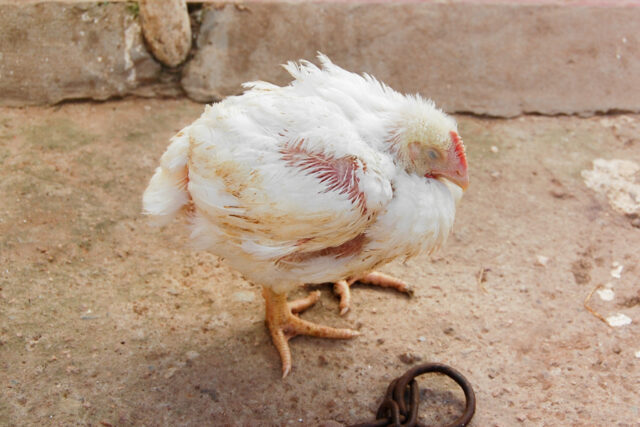
The disease manifests in two forms: subclinical and clinical. The subclinical form occurs in young chicks with maternal antibodies, causing immunosuppression without visible symptoms. The clinical form, seen in chicks aged 3 to 6 weeks, presents with severe symptoms such as depression, ruffled feathers, watery diarrhoea, reluctance to move, and an enlarged haemorrhagic bursa. In severe cases, mortality rates can reach up to 100% in highly susceptible birds.
Post-mortem examinations reveal distinct pathological changes, including hypertrophic and haemorrhagic bursas, swollen kidneys with urate deposits, and petechial haemorrhages in the muscles. The liver often appears pale, and the spleen may exhibit greyish foci. These findings confirm the widespread impact of the virus on multiple organs in the infected birds.
Diagnosis and Prevention
Diagnosing IBD involves a combination of clinical signs, post-mortem findings, and laboratory tests. Histopathological examination of the bursa of Fabricius reveals lymphoid depletion and haemorrhages, while serological tests such as ELISA help detect antibodies against the virus. Advanced molecular techniques, including RT-PCR, are used to identify different viral strains and assess their virulence.
Preventing IBD requires a combination of biosecurity measures, vaccination programs, and proper farm management. Strict sanitation, disinfection of poultry houses, and limiting farm visitors help reduce the risk of contamination. Vaccination plays a crucial role in disease control, with live-attenuated and inactivated vaccines being commonly used. Live-attenuated vaccines, administered through drinking water, provide broad immunity but carry the risk of reverting to virulence. Inactivated vaccines, given to breeder flocks, enhance maternal immunity in chicks, reducing their vulnerability to early infections. Research into recombinant vector vaccines is ongoing, offering potential future solutions.
Economic Impact on Poultry Industry
IBD significantly affects poultry farming due to direct and indirect economic losses. High mortality rates, reduced weight gain, and increased susceptibility to secondary infections result in financial burdens for farmers. The disease-induced immunosuppression diminishes the effectiveness of other poultry vaccines, further escalating production costs. Additionally, the condemnation of infected carcasses due to haemorrhagic lesions lowers market value and profitability.
Conclusion
Infectious Bursal Disease remains a formidable challenge in poultry farming, necessitating continuous research and effective disease management strategies. While vaccination and biosecurity measures help control outbreaks, future advancements in genetic resistance and molecular diagnostics may provide more effective solutions. Ensuring strict biosecurity and adopting improved vaccination protocols are essential for safeguarding poultry health and sustaining the global poultry industry.
Megha Purohit1, Niddhi Arora2, and Racharla Srujan3
1,3PG Scholar, Department of Veterinary Medicine
2 Professor, Department of Veterinary Medicine
College of Veterinary and Animal Sciences, GB Pant University of Agriculture and Technology, Pantnagar, Udhamsingh Nagar, Uttrakhand- 263145