
Bagavathi M, Kapilan P, Pasupathi Karu
MVSc Scholar, Animal Physiology Division, ICAR – National Dairy Research Institute, Karnal-132001, Haryana, India.
Third year, Arawali Veterinary College, Sikar- 332403, Rajasthan, India.
Professor and Head, Animal Nutrition Department, Veterinary College and Research Institute, Tirunelveli-627358, Tamil Nadu, India.
Mail ID – bagavathimuthappan55@gmail.com
The Japanese quail (Coturnix coturnix japonica) has emerged as a significant contributor to India’s poultry sector, particularly in recent decades. Renowned for its rapid growth, prolific egg production, and adaptability, the Japanese quail is increasingly recognized for its economic, nutritional, and social importance across the country.
INTRODUCTION
The Japanese quail is a small, hardy bird originally domesticated in Japan in 1595. In India, two main species of quail are found:
- the black-breasted quail, which is native and found in the wild, and
- the brown-coloured Japanese quail, which is bred specifically for meat and egg production.
The Japanese quail was introduced to India in 1974 and has gained popularity due to its commercial viability and low maintenance requirements.
Japanese Quail
Quail hens reach maturity at around six weeks of age, with females typically weighing between 175 to 200 grams and males around 125 to 150 grams. Female quails begin laying eggs at seven weeks and can continue producing eggs up to 22 weeks of age. Egg-laying usually occurs in the afternoon, around 3:00 PM, and each egg weighs approximately 9 to 10 grams.
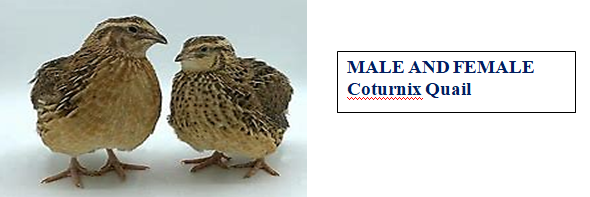
Quails have a lifespan of about 3 to 4 years and are highly productive, laying over 300 eggs annually. Providing 20 hours of light per day has been shown to significantly enhance egg-laying efficiency in quail hens. The incubation period for quail eggs in an incubator is approximately 18 days. Upon hatching, quail chicks weigh around 6 to 7 grams.
Managemental Strategies
Housing Management
- Quails can be reared in either deep litter or cage systems, with cage systems being more suitable due to ease of management and disease control. For the deep litter system, 4-5 quails can be reared per square foot using dry, clean litter materials like straw, rice husk, or sawdust, which must be replaced regularly.
- Proper housing should provide protection from predators, adequate ventilation, and good lighting. Roofing can be made of thatch, tiles, asbestos, or metal sheets, and floors should be cemented or concrete for easy cleaning.
Feeding Management
- Quails require small, easily digestible feed particles. A typical 6-month-old quail consumes about 30 grams of feed daily.
- Providing balanced, nutritious feed with appropriate protein levels is essential for optimal growth and egg production.
- Clean, fresh water must be available at all times, and water troughs should be maintained hygienically.
Health and Disease Management
- Japanese quails are naturally resistant to many diseases, reducing the need for routine vaccinations. However, they can be affected by coccidiosis, bacterial infections like colibacillosis, and respiratory issues.
- Disease prevention includes maintaining hygiene, disinfecting housing regularly and providing warm, dry environments, especially during winter.
Breeding Management
- For breeding, a ratio of 1 male to 3-4 females is recommended. Male birds should be sold within 4-5 weeks if reared for meat.
- For egg production, only females are reared to minimize costs.
- Incubation of eggs requires maintaining proper temperature and humidity, with incubation lasting around 17-18 days.
Nutritional Value
Japanese quail meat and eggs are highly nutritious. Quail eggs, in particular, are rich in protein, phosphorus, iron, and vitamins A, B1, and B2, making them superior to many other poultry eggs in terms of nutritional content. The meat is also considered a delicacy, with a flavour preferred by many consumers over chicken or broiler meat. This nutritional advantage positions Japanese quail as a valuable resource in combating malnutrition and improving food security in India.
Economic Benefits of Japanese Quail Farming in India
Japanese quail farming is a profitable venture, especially suited for small and marginal farmers. The birds require less space and minimal investment and have a short generation interval—reaching market age in just four to six weeks. Their rapid growth and high rate of egg production (up to 250 eggs per year per bird) make them an attractive alternative to traditional poultry farming.
Quail meat is not only considered tastier but also contains less fat compared to chicken and other types of poultry. Feeding costs are significantly lower as well, with quails needing only around 500 grams of feed to reach market weight. Moreover, their feed conversion ratio is highly efficient compared to other livestock raised for meat production.
Quail farming has proven to be a source of supplemental income and employment, particularly in rural and tribal areas. For example, in Odisha’s Koraput district, women’s self-help groups have successfully adopted quail farming, generating significant income even during challenging times such as the COVID-19 pandemic. The birds’ ability to thrive on local feed and the low risk of disease further reduce operational costs and risks, making quail farming accessible to resource-poor communities.
Social and Empowerment Aspects
Quail farming plays a vital role in rural development and women’s empowerment. The ease of management and low investment required allow women and youth to participate actively in this enterprise, promoting gender equality and entrepreneurship. Training programs and support from organizations such as the Indian Council of Agricultural Research (ICAR) and local NGOs have further facilitated the spread of quail farming among marginalized populations.
Conclusion
The Japanese quail has established itself as an important component of India’s poultry sector. Its economic viability, nutritional value, and role in rural empowerment underscore its growing significance. With continued support and awareness, Japanese quail farming holds immense potential to enhance livelihoods, improve nutrition, and contribute to sustainable rural development in India.