CLIMATE-RESILIENT CROP VARIETIES
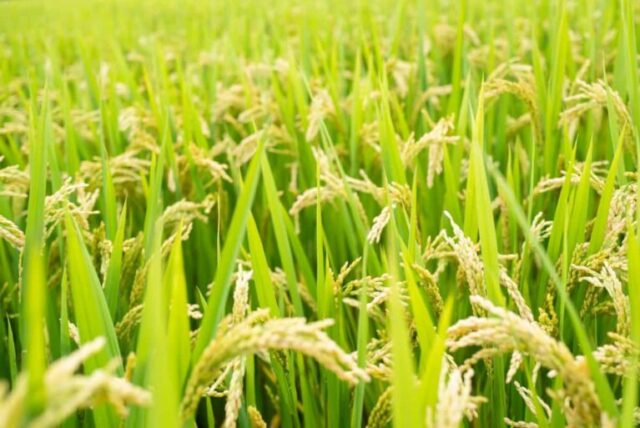
The National Agricultural Research System (NARS), including ICAR Institutes and State/Central Agricultural Universities (CAU/SAU), operating under the Indian Council of Agricultural Research (ICAR), has made remarkable progress in agricultural innovation over the past decade. From 2014 to 2024, the research system successfully developed 2,900 new crop varieties, of which 2,661 are climate-resilient, ensuring better adaptability to changing climatic conditions. These improved varieties aim to enhance productivity, withstand abiotic stresses, and contribute to sustainable agricultural practices.
For Kerala, 63 field crop varieties have been specifically developed, comprising 23 cereal varieties, 2 oilseed varieties, 10 pulse varieties, 15 forage crop varieties, and 13 sugarcane varieties, with an impressive 58 varieties classified as climate-resilient. These crop advancements have played a crucial role in ensuring food security, optimizing yield under adverse conditions, and empowering farmers with better-performing crop options tailored to the state’s agro-climatic conditions.
Water Conservation and Irrigation Efficiency through Per Drop More Crop (PDMC)
To further enhance farm-level water-use efficiency, the Government of India launched the Centrally Sponsored Scheme of Per Drop More Crop (PDMC) in 2015-16. This scheme, which initially functioned as part of the Pradhan Mantri Krishi Sinchayee Yojana (PMKSY) from 2015-16 to 2021-22, is now being implemented under the Rashtriya Krishi Vikas Yojana (RKVY) from 2022-23 onwards. The PDMC focuses on micro-irrigation systems like drip and sprinkler irrigation, significantly contributing to water conservation, efficient nutrient delivery through fertigation, reduced labor dependency, and overall cost reduction for farmers.
To encourage adoption, the government provides financial assistance of 55% to small and marginal farmers and 45% to other farmers for the installation of drip and sprinkler irrigation systems. These initiatives have proven to enhance crop productivity, optimize water resources, and ensure long-term agricultural sustainability.
Gramin Krishi Mausam Sewa (GKMS) and Agrometeorological Advisory Services (AAS)
Extreme weather events such as cyclones, droughts, and floods pose significant challenges to Indian agriculture. To mitigate risks and equip farmers with real-time weather insights, the India Meteorological Department (IMD) operates the Gramin Krishi Mausam Sewa (GKMS) scheme. This program delivers operational Agrometeorological Advisory Services (AAS) in collaboration with ICAR, State Agricultural Universities (SAUs), and other research institutions to assist farmers in making climate-smart decisions.
Currently, 130 Agromet Field Units (AMFUs) are operational across India, located at SAUs, ICAR institutes, and IITs, providing district-level weather bulletins and advisories. These advisories are disseminated through multiple channels, including print and electronic media, Doordarshan, radio, the internet, and mobile-based platforms.
In Kerala, five AMFUs—Ambalavayal, Pillicode, Thrissur, Vellayani, and Kumarakom—prepare district-specific agrometeorological bulletins. These bulletins, issued biweekly, help farmers optimize sowing schedules, irrigation cycles, pest control strategies, and fertilizer applications based on weather predictions. Additionally, SMS-based alerts and advisories are sent via the Kisan Portal and through public-private partnerships (PPP) to warn farmers about extreme weather events such as cyclones, heavy rainfall, and deep depressions.
Farmers can also access localized weather updates and agromet advisories through the ‘Meghdoot’ and ‘Mausam’ mobile apps, launched by the Government of India. These services are further integrated into Kerala’s Agriculture Information Management System (AIMS), benefitting around 40 lakh farmers by providing timely, multilingual agricultural information for informed decision-making.
Panchayat-Level Weather Forecasts and Digital Platforms
Recognizing the need for hyper-local weather forecasting, the Ministry of Earth Sciences (MoES), in collaboration with the Ministry of Panchayati Raj (MoPR), launched Panchayat-level weather forecasting services for nearly all Gram Panchayats in India on 24th October 2024. These forecasts are now accessible via multiple digital platforms, including:
- e-Gramswaraj (egramswaraj.gov.in)
- Meri Panchayat App
- e-Manchitra Portal of MoPR
- Mausamgram Portal of IMD, MoES
This initiative enhances climate preparedness at the grassroots level, allowing Gram Panchayats to incorporate weather intelligence into local agricultural planning.
Drought Monitoring and Geoportal Development
To bolster drought resilience, the Department of Agriculture & Farmers’ Welfare (DA&FW), in collaboration with the Space Applications Centre (SAC), ISRO, has developed a comprehensive Geoportal for real-time drought monitoring. This single-window digital platform integrates multiple drought indicators, including:
- Rainfall patterns
- Soil moisture levels
- Remote sensing-based crop conditions
- Reservoir and water storage data
The Geoportal enables district- and tehsil-level assessments of drought conditions, facilitating early warning systems, targeted interventions, and strategic water resource management. By providing data-driven insights, the portal supports policymakers, researchers, and field officers in implementing effective drought mitigation strategies.
Government’s Commitment to Agricultural Resilience and Future Outlook
These transformative initiatives underscore the Government of India’s commitment to enhancing agricultural resilience, promoting climate-smart practices, and leveraging technology for farmer empowerment. The development of climate-resilient crop varieties, expansion of micro-irrigation facilities, and integration of advanced meteorological services are critical steps toward ensuring food security, optimizing resource use, and improving farmer livelihoods in the face of climate uncertainties.
Going forward, the Ministry of Agriculture & Farmers Welfare, in collaboration with ICAR, IMD, ISRO, and other scientific institutions, will continue to enhance research, strengthen digital platforms, and promote farmer-centric innovations. These efforts aim to equip Indian farmers with cutting-edge tools and knowledge, ensuring their long-term prosperity and resilience in an evolving agricultural landscape.
This information was provided by Minister of State for Agriculture and Farmers Welfare, Shri Bhagirath Choudhary, in a written reply in Lok Sabha today.