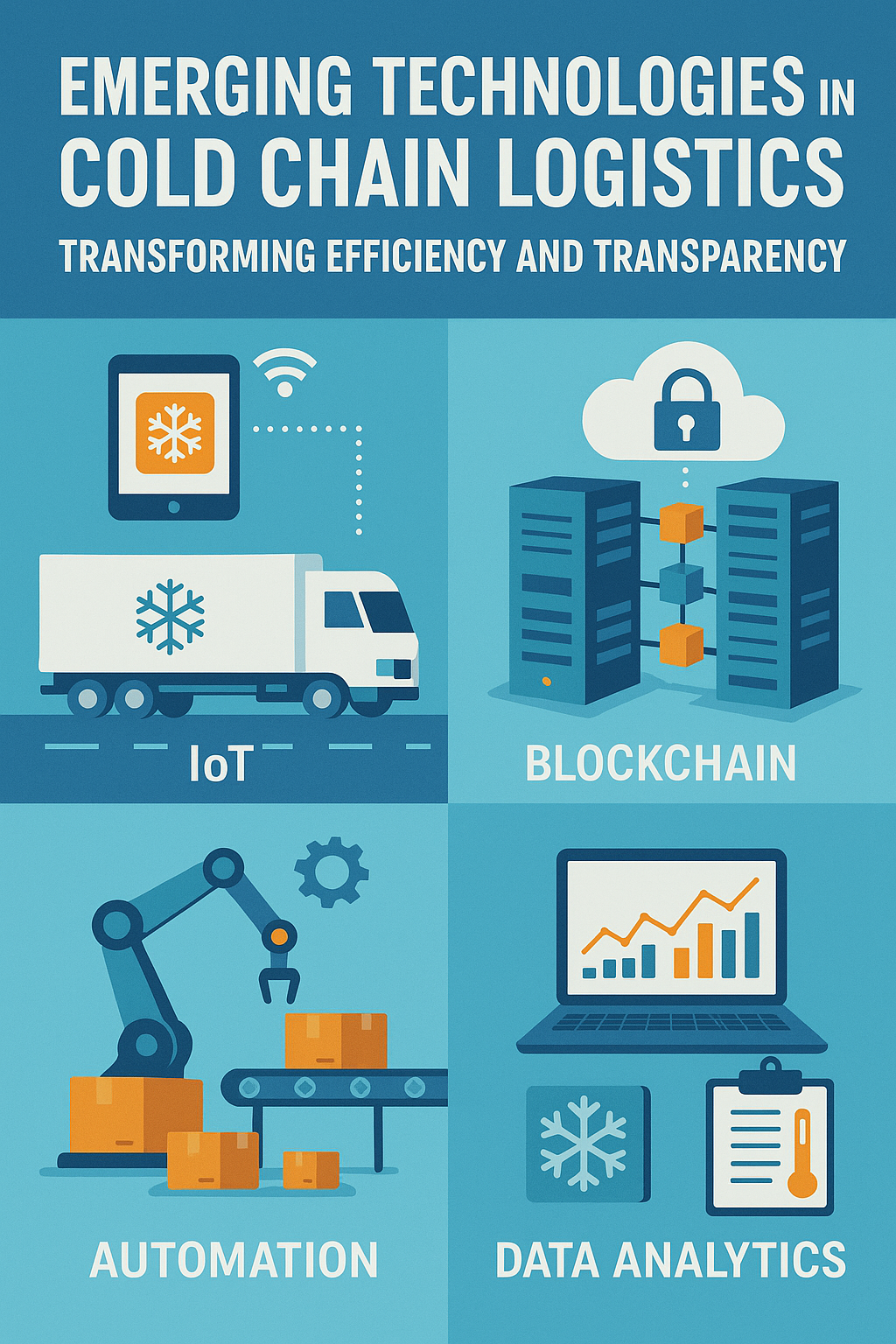
Emerging Technologies in Cold Chain Logistics: Transforming Efficiency and Transparency
The cold chain is a critical aspect of supply chain management, ensuring that temperature-sensitive products such as dairy, poultry, seafood, and pharmaceuticals remain fresh and safe for consumption. Traditionally, cold chain logistics relied on manual monitoring and conventional refrigeration systems. However, advancements in technology, particularly Artificial Intelligence (AI), the Internet of Things (IoT), Smart Refrigeration Systems, and Blockchain, are revolutionizing the way temperature-sensitive products are stored and transported. These innovations are not only enhancing efficiency but also ensuring greater transparency and reducing losses due to spoilage or mishandling.
AI and IoT in Real-Time Temperature Monitoring
One of the biggest challenges in cold chain logistics is maintaining optimal temperature levels throughout the supply chain. Even a slight deviation in temperature can lead to spoilage, reducing the shelf life of perishable products and causing significant financial losses. This is where AI and IoT-powered real-time temperature monitoring come into play.
How AI and IoT Improve Cold Chain Logistics
- Real-Time Data Collection: IoT sensors installed in refrigerated trucks, warehouses, and cold storage facilities continuously collect temperature data. These smart sensors provide real-time updates, allowing logistics managers to monitor conditions at all times.
- Predictive Maintenance: AI-powered predictive analytics help detect potential failures in refrigeration units before they happen. By analyzing data trends, AI can predict if a refrigeration system is likely to malfunction and alert technicians to take preventive action, minimizing the risk of product spoilage.
- Automated Alerts: If temperature fluctuations occur, AI-based monitoring systems instantly trigger alerts. These alerts notify logistics teams via mobile applications, allowing them to take immediate corrective actions such as rerouting shipments or adjusting storage conditions.
- Improved Decision-Making: AI-driven analytics help optimize cold chain routes, identifying the most efficient transportation paths to reduce transit time and ensure timely deliveries.
By leveraging AI and IoT, businesses can achieve better product quality, lower wastage, and enhanced compliance with regulatory standards.
Smart Refrigeration Systems and Automated Warehouses
Traditional refrigeration systems are often inefficient, consuming high amounts of energy and leading to uneven temperature distribution. However, with smart refrigeration systems and automated warehouses, cold chain logistics is undergoing a major transformation.
The Rise of Smart Refrigeration Systems
- Energy Efficiency: Advanced refrigeration units now use AI-based algorithms to adjust cooling levels based on product load and external conditions. This reduces energy consumption and operating costs while maintaining the required temperature levels.
- Automated Temperature Control: Smart refrigeration units continuously analyze environmental factors and adjust cooling settings in real-time. This ensures uniform temperature distribution, preventing hotspots that could lead to product damage.
- Remote Monitoring and Control: Logistics managers can control refrigeration settings remotely via cloud-based platforms. This is particularly useful for multi-location cold chain operations, where managers can monitor and adjust temperatures without being physically present.
Automated Warehouses for Cold Chain Logistics
- Robotic Handling of Goods: Automated warehouses use robotic arms and autonomous vehicles to move products within cold storage facilities. This minimizes human intervention, reducing contamination risks and ensuring faster order fulfillment.
- AI-Powered Inventory Management: AI-driven systems track inventory levels in real-time, ensuring that perishable goods are moved efficiently to avoid overstocking or expiration.
- Temperature-Zoned Storage: Modern warehouses have multiple temperature zones, allowing businesses to store different types of perishable goods (such as dairy, meat, and frozen items) at their optimal temperatures.
With the implementation of smart refrigeration and automation, businesses can ensure greater product integrity, lower operational costs, and improved customer satisfaction.
Blockchain for Transparency in Supply Chain Tracking
Transparency has always been a challenge in cold chain logistics. With multiple stakeholders involved – from producers and suppliers to transporters and retailers – ensuring product integrity at every stage is complex. Blockchain technology is addressing this issue by providing a tamper-proof and transparent digital record of cold chain transactions.
How Blockchain Enhances Cold Chain Transparency
- Immutable Record-Keeping: Every step of the supply chain is recorded on a blockchain ledger, creating a permanent and unalterable record. This ensures that all temperature readings, transit details, and handling data are securely stored and easily accessible.
- End-to-End Traceability: Blockchain allows stakeholders to track a product’s journey from its origin to the final destination. If an issue arises, such as a temperature breach, companies can quickly identify where the problem occurred and take corrective action.
- Automated Smart Contracts: Blockchain uses smart contracts to automate transactions. For instance, if a shipment maintains the correct temperature throughout its journey, payments to suppliers and transporters can be automatically released. If there is a temperature violation, compensation claims or refunds can be processed seamlessly.
- Building Consumer Trust: Consumers today demand greater transparency about the products they purchase. With blockchain-enabled supply chains, consumers can scan QR codes on packaging to access detailed information about the product’s sourcing, transportation, and storage conditions.
By integrating blockchain into cold chain logistics, businesses can achieve higher accountability, stronger compliance with food safety regulations, and increased trust among customers.
Conclusion: The Future of Cold Chain Logistics
The adoption of AI, IoT, smart refrigeration systems, and blockchain technology is transforming cold chain logistics into a highly efficient, transparent, and sustainable industry. These innovations are helping companies reduce spoilage, optimize energy consumption, and enhance compliance with food safety regulations.
As the demand for perishable goods continues to rise, businesses that invest in these emerging technologies will gain a competitive edge, minimize losses, and improve customer satisfaction. The future of cold chain logistics lies in digital transformation, and companies that embrace these advancements will lead the way in delivering safer and fresher products to consumers worldwide.