The livestock industry has undergone a significant transformation in recent years, driven by advances in technology. From artificial intelligence (AI) and robotics to genomics and precision agriculture, these innovations are improving the efficiency, sustainability, and welfare of livestock farming. In this article, we’ll explore some of the most exciting recent developments in livestock technology, and examine their potential impact on the industry.
1. AI-Powered Farming
Artificial intelligence is being increasingly used in livestock farming to optimize feeding, breeding, and health management. AI algorithms can analyze data from sensors and cameras to detect early signs of illness or stress in animals, enabling farmers to take prompt action.
- Predictive Analytics: AI-powered predictive analytics can help farmers forecast disease outbreaks, allowing them to take proactive measures to prevent them. For example, AI algorithms can analyze data on temperature, humidity, and animal behavior to predict the likelihood of a disease outbreak.
- Automated Decision-Making: AI can automate decision-making processes, such as determining the optimal feeding schedule for a herd or identifying the most suitable breeding candidates. For instance, AI algorithms can analyze data on animal growth rates, feed consumption, and genetic profiles to determine the optimal feeding schedule.
- Real-Time Monitoring: AI-powered monitoring systems can track animal behavior, health, and nutrition in real-time, enabling farmers to respond quickly to any issues that arise. For example, AI-powered cameras can monitor animal behavior and detect early signs of illness or stress.
2. Robotic Milking and Feeding Systems
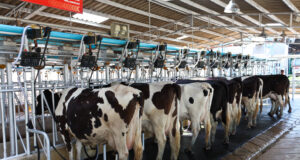
Robotic milking and feeding systems are revolutionizing dairy farming by increasing efficiency and reducing labor costs. These systems use sensors and automation to milk cows and provide them with tailored nutrition.
- Increased Efficiency: Robotic milking systems can milk cows around the clock, increasing milk production and reducing labor costs. For instance, robotic milking systems can milk cows every 8-10 hours, increasing milk production by up to 10%.
- Improved Animal Welfare: Robotic feeding systems can provide cows with tailored nutrition, improving their health and welfare. For example, robotic feeding systems can provide cows with a diet that is tailored to their individual nutritional needs.
- Data-Driven Decision-Making: Robotic systems can provide farmers with valuable data on milk production, cow health, and feeding patterns, enabling them to make data-driven decisions. For instance, robotic systems can provide farmers with data on milk production, enabling them to identify areas for improvement.
3. Genomic Selection
Genomic selection is a technology that allows farmers to select breeding animals based on their genetic potential. This approach is improving the accuracy of breeding programs, enabling farmers to produce healthier, more productive animals.
- Improved Breeding Accuracy: Genomic selection can improve the accuracy of breeding programs by identifying genetic markers associated with desirable traits. For example, genomic selection can identify genetic markers associated with improved milk production or disease resistance.
- Increased Productivity: By selecting breeding animals with desirable genetic traits, farmers can produce more productive animals. For instance, selecting breeding animals with genetic traits associated with improved milk production can increase milk yields.
- Reduced Disease Incidence: Genomic selection can help reduce the incidence of genetic diseases by identifying and selecting against genetic markers associated with disease. For example, genomic selection can identify genetic markers associated with inherited diseases, enabling farmers to select against these traits.
4. Precision Agriculture
Precision agriculture involves using advanced technologies such as drones, satellite imaging, and sensors to optimize crop yields and reduce waste. In livestock farming, precision agriculture is being used to optimize grazing management and reduce the environmental impact of farming.
- Optimized Grazing Management: Precision agriculture can help farmers optimize grazing management by identifying the most productive grazing areas and monitoring soil health. For example, drones equipped with sensors can monitor soil moisture and nutrient levels, enabling farmers to identify the most productive grazing areas.
- Reduced Waste: Precision agriculture can help reduce waste by optimizing feeding and reducing the amount of feed wasted. For instance, sensors can monitor feed consumption and adjust feeding schedules accordingly.
- Improved Environmental Sustainability: Precision agriculture can help reduce the environmental impact of farming by optimizing fertilizer and pesticide use. For example, sensors can monitor soil nutrient levels and adjust fertilizer application accordingly.
5. Virtual Fencing
Virtual fencing is a technology that uses GPS and wireless communication to create virtual boundaries for livestock. This approach is reducing the need for physical fences, enabling farmers to manage their land more flexibly and reducing the risk of animal escapes.
- Increased Flexibility: Virtual fencing enables farmers to create flexible grazing patterns, reducing the need for physical fences. For example, virtual fencing can enable farmers to create rotational grazing patterns, improving soil health and reducing erosion.
- Reduced Labor Costs: Virtual fencing can reduce labor costs by automating the process of monitoring and managing animal movement. For instance, virtual fencing systems can alert farmers when animals are approaching a virtual boundary, enabling them to take prompt action.
- Improved Animal Welfare: Virtual fencing can improve animal welfare by reducing the risk of animal escapes and injuries. For example, virtual fencing can prevent animals from escaping onto roads or into neighboring properties.
6. Livestock Monitoring Systems
Livestock monitoring systems are being used to track the health, behavior, and nutrition of animals in real-time. These systems use sensors and data analytics to provide farmers with insights that can inform their management decisions.
- Real-Time Monitoring: Livestock monitoring systems can track animal health, behavior, and nutrition in real-time, enabling farmers to respond quickly to any issues that arise. For example, sensors can monitor animal temperature, enabling farmers to detect early signs of illness.
- Data-Driven Decision-Making: Livestock monitoring systems can provide farmers with valuable data on animal health, behavior, and nutrition, enabling them to make data-driven decisions. For instance, data analytics can identify trends in animal behavior, enabling farmers to adjust their management strategies accordingly.
- Improved Animal Welfare: Livestock monitoring systems can improve animal welfare by enabling farmers to detect early signs of illness or stress. For example, sensors can monitor animal behavior, enabling farmers to detect early signs of stress or anxiety.
Conclusion
Recent advances in livestock technology are transforming the industry, enabling farmers to produce more efficiently, sustainably, and humanely. From AI-powered farming to genomic selection, these innovations are improving animal welfare, reducing environmental impact, and increasing productivity. As these technologies continue to evolve, we can expect to see further improvements in the livestock industry, benefiting both farmers and consumers alike.
Future Directions
The future of livestock technology holds much promise, with several exciting developments on the horizon. Some potential future directions include:
- Increased Adoption of AI and Robotics: As AI and robotics technologies continue to evolve, we can expect to see increased adoption in the livestock industry.
- Integration of Livestock Monitoring Systems: Livestock monitoring systems are likely to become increasingly integrated, enabling farmers to access a range of data and insights from a single platform.
- Development of New Genomic Selection Tools: New genomic selection tools are likely to be developed, enabling farmers to select breeding animals with even greater accuracy.
- Increased Focus on Sustainability: The livestock industry is likely to place increasing emphasis on sustainability, with technologies such as precision agriculture and virtual fencing playing a key role.
Overall, the future of livestock technology looks bright, with several exciting developments on the horizon. As these technologies continue to evolve, we can expect to see further improvements in the livestock industry, benefiting both farmers and consumers alike.
Author: *Shivali Khandelwal (PhD Scholar, Division of Biological Standardization, ICAR- Indian Veterinary Research Institute, Izatnagar, Bareilly, Uttar Pradesh, India)
(* Email: shivalikhandelwal11@gmail.com)